|
|
|
|
Fish Acclimation So, you have already setup your home for your new betta and have conditioned and de-chlorinated the water or left the water sit for at least 3 days right? If not you could be in for trouble. It is my theory that improper fish acclimation is the number 2 cause of fish death among beginning fish keepers. (Overfeeding is the #1). We have all been there, you just got your new fish and you can’t wait to see them in their full glory!. You feel sorry for them in their bag or old container so you rush to get them to their new homes right? WRONG! A critical part of raising fish is PATIENCE. If you are patient and follow the below procedures, you will increase your success of having healthy fish. I know of so many people who know all of this information about treating disease and if you have been reading anything about fish keeping you have heard of ICK and other disease, well I can tell you my experience has been that I have never had a fish that was treated for disease that recovered and was better or equal to the fish it was before it got sick. So my approach to disease is to PREVENT it not figure out how to deal with it. I truthfully will discard any fish that shows sign of disease. The cost of treating disease or the threat of spreading to my entire fish room far out ways that one fish. Ok enough of that
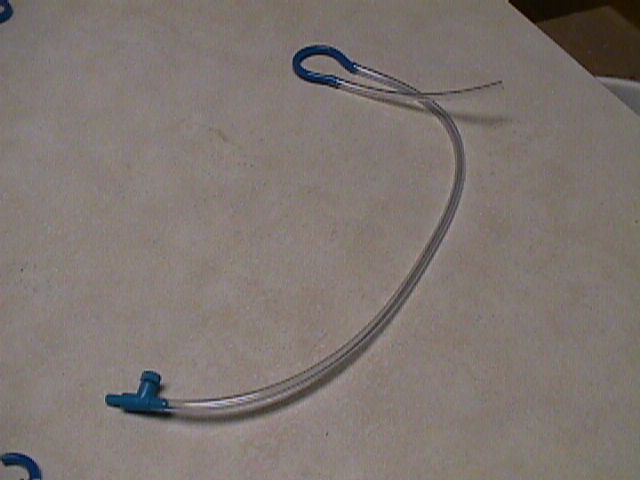
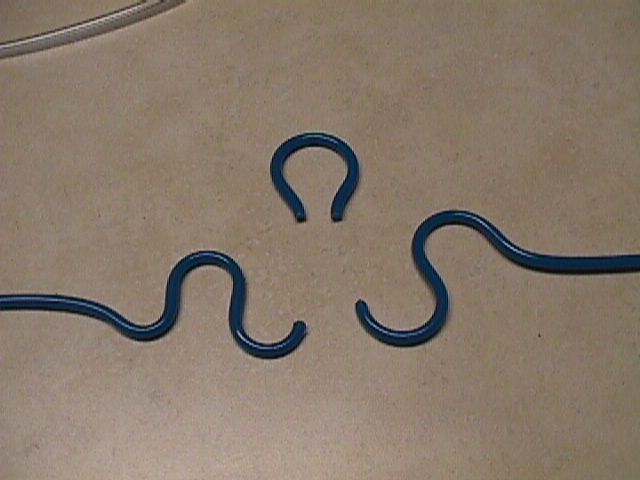
THE GOAL. Adjust the fish’s environment very slowly to minimize the change of the above factors and bring the old water to the same properties of your water. Before I go further, I will state that the methods I use vary depending on how different current fish conditions are compared to the conditions they will be moved too. Also, the value of a fish dictates different method. For instance, if I am moving a fish within my fish room I may simply net them out and move them. I can do this because I know 2 of the 3 conditions above are the same. Temp and PH. If it is my top breeder, I will never just net and drop the fish because of its value to me. Any fish brought into my fish room will be acclimated for at least an hour. Below is a listing of methods of acclimation. They are in order of ease. 1. Floating the Bag. The quickest method of acclimating fish is to float the bag of fish in the new home for 20-30 minutes and release the fish. Although is method can be used I do not believe it is effective enough. Temperature will be the same for the fish but you have not addressed any of the water condition difference. I never use this method. 2. Floating the bag, but opened at one end. With this method the bag is floated with one end opened. Water is gradually added from the new container to the bag over a period of time. This is not a bad method. It deals with all 3 water factors. The secret to using this method is to change 1/4 of the volume of water every 20 minutes or so over at least a hour. You will want to make sure the bag does not fall into the container. After the bag is full. pour most of the water out into the sink (be careful not to pour the fish out in the sink, it is best to pour the water out over a container to catch the fish and prevent it from going down the drain) but leave the fish with enough water to be comfortable. Repeat the above process for at least an hour.. 3. Float the bag, but put a hole or holes in it to let tank water seep in. This can be a big hole or small toothpick size holes . The big hole method is really to let the fish swim out at their own volition. Note that this method allows the mixing of pet shop water or shipping water with your tank's water. I try to put as little old water into my new containers as possible . 4. Just dump the fish in, no real acclimation. Not really recommended by anyone but but can be done with hardier fish, and they are put into a medicated tub, and then into a holding tank. 5. Gradually add tank water to the bag water using a drip line. I personally feel this is the best method, but it does take some preparation ahead of time. With the use of a drip line, the fish are put into a small container (can be the shipping bag) water is introduced a drop at a time by siphoning from the water in the new container into the holding container. The new water container must of course be at a higher level so that a siphon can be started I start the siphon of water by using a turkey baster and set the valve to drip at a drop a second. Of course the container with the new water must be at a higher level than the old water container to maintain the siphon. If you are serious about purchasing high quality fish and want to make sure you acclimate properly this device is a must. See drip Line construction below for a summary of how to make one. Drip line Construction You can use a length of standard airline tubing. The trick is how to deal with both ends of it. The end that goes into the tank needs to be secured. I suggest making an upside down "U" shaped device that hooks onto the edge of the tank or bowl. You can use a piece of standard ridged 3/16" tubing and bend it by soaking in hot water or you can do what I did, and go to the local dollar store and pick up a crazy straw it works perfectly. here is a picture of the final product that you are trying to achieve.
The small end fits in the tank or bowl and the long end with the valve dangles from above and drips water into the bag or contain with the fish. Both ends are adjustable to allow for any height or water level and the valve is used to control the drip rate. so here is how to construct it! 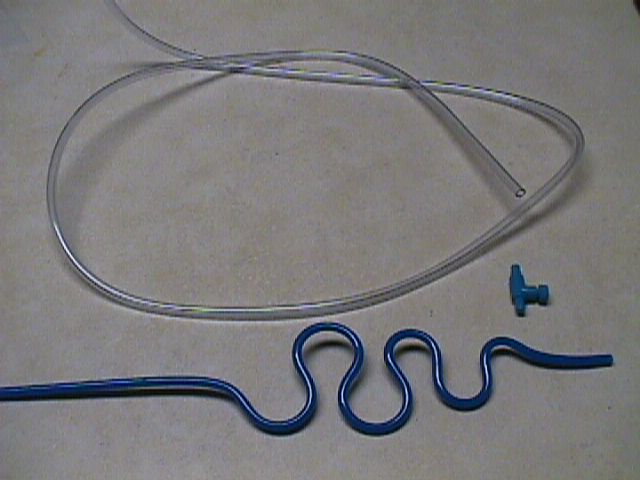 You
will need the following items.
crazy straw or 3/16" rigid tubing (bent to U shape)
airline
air valve You
will need the following items.
crazy straw or 3/16" rigid tubing (bent to U shape)
airline
air valve
next take the U section at the top and add a small air line on one side and a longer one on the other side. The small side will go into the "New water container" which will be at a higher level than the "Old water container" so water can drip by gravity a drop at a time. If you do not have a valve you can tie a knot in the airline to control the drip Once constructed, you can start the siphon action with a turkey baster. The end of the baster goes not fit very well on tubing, but you can press it into pliable tubing and provide enough of a seal with pressure from your fingers. The final question is, how long of an acclimation period do we provide? Most authors prefer at least 30 minutes, but an hour would be better. If the acclimation vessel becomes too full from the drip, excess water needs to be removed to allow for accommodate more tank water.
-------------------------------------------------------------------------------- FINAL NOTE I find the process of acclimation to be stressful for myself, as well as the fish. I get home with those fish and I'm aware that the clock is ticking and I need to get them out of those bags and start the acclimation process I hope that the information presented here will help you to make an informed choice of an acclimation method, and will be of some benefit to your fish keeping.
|
|
|
Questions or problems regarding this web site should
be directed to Greg
Engler |